


Car audio crossovers matter most in systems that need cleaner separation between tweeters, mids, and bass drivers. The right choice can keep harsh highs in check, keep vocals from getting muddy, and make an upgrade feel more coherent instead of louder for its own sake. That matters in daily commuters, weekend project cars, and systems built piece by piece over time.
The Shortlist At A Glance

Audiopipe CRX-203 2-Way Crossover (2 Pack)
DS18 PRO-CFX 2-Way Car Audio Passive Crossover (2 Pack)

HiQltyla 3 Way Speaker Crossover PUV-W3 200W 2 Pack

DS18 PRO-TW220B 3” Aluminum Bullet Tweeter (2 Speakers)
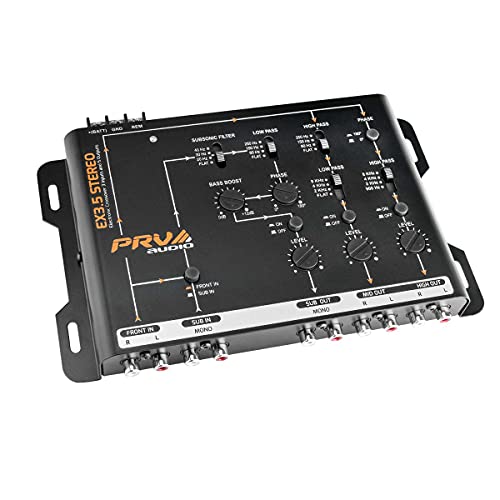
PRV AUDIO EX3.5 Electronic Car Audio Crossover

RonDexy RDBB-150 Bass Blocker 4 Ohm Pair
More Details On Our Top Picks
For compact car audio upgrades, the CRX-203 keeps the job straightforward. A passive crossover splits signal paths without a separate power source, which suits straightforward tweeter and midrange installs in a door panel or under-seat build.
The two-pack format is useful in a front-stage setup, especially for a daily driver that needs both sides handled together. The trade-off is simple, because passive designs are less adjustable than electronic units like the PRV AUDIO EX3.5, so tuning flexibility stays limited.
Strong Points
- Two-way routing suits basic speaker separation.
- Pair format covers both sides of a front setup.
- Passive design keeps installation less involved.
Things To Consider
- It offers less tuning control than an active processor.
- Documentation is light, so planning the layout matters.
Key Specs
Who It Suits Best
Entry-level installers and straightforward system builders get the cleanest fit from this model, especially in a sedan or hatchback with a simple tweeter-and-midrange layout.
A Better Fit Elsewhere
PRV AUDIO EX3.5 suits installers who want active control over a more layered system, with extra channel routing and processor-style adjustment.
The PRO-CFX reads like a more focused version of the Audiopipe CRX-203, with the same two-way passive idea but a stronger emphasis on tweeter and mid-range pairing. In a car that already has decent speakers and just needs cleaner separation, that narrower purpose makes sense.
Power handling up to 300 watts gives it enough headroom for many upgraded front-stage systems, assuming the rest of the chain is matched properly. The honest read is that passive crossovers still leave less room for fine-tuning than an electronic processor, but they stay easier to drop into a standard install.
What We Like
- Designed for tweeters and mid-range speakers.
- Two-pack format helps complete both channels.
- 300-watt handling suits stronger car audio setups.
- Passive layout keeps wiring simpler than active processing.
Areas To Watch
- Less flexible than an electronic crossover.
- Works best with a planned, matched speaker setup.
Feature Snapshot
Made For
Upgraded factory-system replacements and modest custom builds benefit most here, especially where a clean two-way divide matters more than deep tuning control.
Look Elsewhere When
PRV AUDIO EX3.5 fits more complex installs that need electronic crossover control and extra RCA routing.
The PUV-W3 shifts the shortlist away from cars and into home audio, which changes the whole fit. A three-way crossover divides the signal for bass, midrange, and tweeter use, so bookshelf speaker builders get a more layered control path than the two-way car picks above.
Its 4 to 8 ohm range matters because that impedance window is common in home setups, and the 200W rating gives it enough room for many living-room systems. The trade-off is that this is the least car-relevant option in the group, so a dashboard or door-panel project points elsewhere.
Highlights
- Three-way design supports bass, midrange, and tweeter separation.
- Dual-pack format works well for stereo home builds.
- 4 to 8 ohm range suits many bookshelf speakers.
- Useful for hobbyists building a more layered sound field.
Softer Spots
- Better suited to home audio than car audio.
- Three-way layouts ask for more planning during setup.
Details At A Glance
Whose Shelf It Belongs On
Home audio hobbyists building a two-speaker stereo pair get the clearest fit from this crossover, especially in a workshop or living-room project.
Another Choice May Suit
Audiopipe CRX-203 makes more sense for car-focused installs that need a simpler two-way layout and less cabinet planning.
This DS18 pair sits in a different lane from the passive crossover boxes above, because the crossover is built into the tweeter design itself. That keeps the install compact for a loud front stage, though it also makes the setup more specialized than a separate crossover and speaker pairing.
The aluminum body points toward durability and a sharper, more assertive tweeter role, while the 104 dB sensitivity figure signals efficient output. In a truck cab or sporty hatchback, that kind of efficiency can help high frequencies stay present without leaning too hard on amplifier power.
Upsides
- Built-in crossover simplifies part of the install.
- High sensitivity supports efficient output.
- Aluminum construction suits tougher mobile use.
- Two-speaker format works for a matched front stage.
Minor Gripes
- More specialized than a separate crossover-and-speaker setup.
- High-output tweeter tuning may feel bright in some systems.
Core Details
Right Fit For
Custom car audio builds that want a strong, efficient tweeter section get the most out of this pair, especially where space is tight and output matters.
Where A Sibling Pick Shines
DS18 PRO-CFX suits installers who want a separate passive crossover for tweeters and mid-range speakers instead of an integrated tweeter solution.
The EX3.5 sits at the more advanced end of this roundup, because it works as an electronic crossover rather than a passive filter. That means finer control over a system that uses separate amplifiers, multiple speaker bands, or a more custom signal path.
Its 4 in, 6 out RCA channel layout and 9-volt support make it a stronger fit for serious car audio planning than the simpler passive entries. The trade-off is extra setup complexity, so this is less natural for a quick replacement and more suited to a system that already has structure.
Bright Spots
- Electronic control supports more detailed tuning.
- Three-way or two-way operation broadens system use.
- Four inputs and six outputs aid multi-channel routing.
- Well suited to advanced car audio layouts.
Room For Improvement
- Setup asks for more planning than a passive crossover.
- Most useful in systems that already use RCA routing.
Technical Sheet
The Right Fit
Experienced installers and system builders planning a multi-amplifier setup get the most from this crossover, especially in a project car with room for deliberate tuning.
Skip It When
Audiopipe CRX-203 is easier to live with for a simple two-way speaker upgrade that does not need electronic processing.
The RDBB-150 is more of a bass filter than a full crossover, and that narrower role is exactly why it earns a place here. In a car with 8 to 12 inch speakers that are being asked to play cleaner midrange, a bass blocker can keep the low end from overwhelming the rest of the system.
Its 0 to 150 Hz range gives a clear sense of where the filter starts working, while the 4 ohm rating and 265 uF value point to a specific electrical match. The practical upside is straightforward, though the limited frequency control means it belongs in targeted installs rather than broad system redesigns.
What We Like
- Targets low-frequency energy before it reaches the speaker.
- Works with 8 to 12 inch speaker setups.
- Pair format supports left and right channels.
- Helpful in systems where bass bleed is the issue.
Points To Note
- It is a narrower tool than a full crossover.
- Best for specific frequency control, not broad tuning.
Feature Rundown
Best Suited To
Car audio setups that need cleaner midrange from larger speakers get the clearest value here, especially in systems where bass control matters more than full crossover flexibility.
Swap It Out When
DS18 PRO-CFX is the better route for a fuller two-way crossover in a front-stage build that needs more complete signal separation.
How To Choose The Right Car Speaker Crossovers
Match The Crossover Type To The Build
Passive crossovers sit between the amplifier and speakers, then split the signal without their own power source. That keeps installs simpler for basic two-way systems, especially in door speakers and compact front stages.
Electronic crossovers, like the PRV AUDIO EX3.5, work at signal level and give more control over routing. They suit custom systems with multiple amplifiers, but they add setup steps and a need for cleaner planning.
Pay Attention To Speaker Layout
Two-way crossovers suit tweeter and midrange pairings, while three-way units add a separate path for bass or woofer duty. That extra band can make a system sound more organized, though it also increases the number of components that need matching.
Bass blockers are narrower tools. They make the most sense in systems where a larger speaker is trying to play too much low end and the goal is cleaner mids rather than full-band control.
Check Power, Impedance, And System Fit
Power handling matters because it should line up with the rest of the chain, not just the speaker labels. Impedance, measured in ohms, tells the electrical load a crossover expects, so matching that number avoids awkward pairings.
For daily drivers, simple passive models often offer enough control without turning the install into a science project. For project cars, studio-style home builds, or multi-amp setups, the more advanced electronic path pays for itself in control.
Things Worth Knowing First
Hidden Buying Traps
A common mistake is treating every crossover like a universal part. A 3-way home audio unit, a car passive crossover, and a bass blocker each solve a different problem, so the label matters as much as the wattage.
Another easy miss is ignoring impedance and speaker size. A model designed for 4 to 8 ohms or for 8 to 12 inch speakers should stay in that lane, because the wrong match can make setup more difficult than it needs to be.
The Upgrade Payoff
Higher-tier models usually cost more because they add routing flexibility, more robust parts, or electronic control. That extra spend tends to matter most in systems with amplifiers, multiple speaker bands, or a serious plan for tuning.
For a simple head-unit refresh, a passive two-way unit often makes more sense. For a system built in stages, the upgrade path usually starts to pay off once control becomes more valuable than simplicity.
Frequently Asked Questions
What Does A Car Speaker Crossover Do?
A crossover splits audio into bands so the right speaker handles the right part of the signal. That separation helps tweeters avoid bass duty and keeps mids from sounding overloaded.
Is A Passive Crossover Easier To Install?
Passive models are usually easier because they do not need separate power or processor wiring. The trade-off is less tuning control than an electronic unit.
Do Bass Blockers Count As Crossovers?
Bass blockers are a narrow form of crossover because they filter out low frequencies. They are useful when the goal is to protect smaller speakers from deep bass.
Can A Home Audio Crossover Work In A Car?
Some electrical traits may overlap, but home and car systems are built around different layouts and use cases. A car install usually benefits more from a crossover made for mobile audio.
What Matters More, Watts Or Impedance?
Both matter because they describe different parts of the system match. Watt handling shows the power range, while impedance shows the electrical load the crossover expects.
Closing Thoughts
Car speaker crossovers are less about flash and more about control, and that’s what makes the right one noticeable over time. The simplest passive options suit everyday cars well, the electronic route fits deeper tuning, and a bass blocker handles a narrow but useful job. For a front-stage refresh, the Audiopipe and DS18 passive picks stay easy to understand. For more complex builds, the PRV AUDIO unit gives the most room to shape the system without guesswork.