


Road noise, door rattle, and thin sheet-metal buzz can wear down even a good commute. Car Sound Deadenings help tame those issues by adding mass, damping vibration, and, in some builds, a heat barrier. The right choice depends on coverage, thickness, and how much installation effort fits the vehicle.
Quick Look At Our Shortlist

Siless Hybrid 3in1 25 sqft Sound Deadening Mat

Siless Max 120 mil 30 sqft Sound Deadening Mat

Butyl Sound Deadening 80mil 36sqft Mat (33pcs)
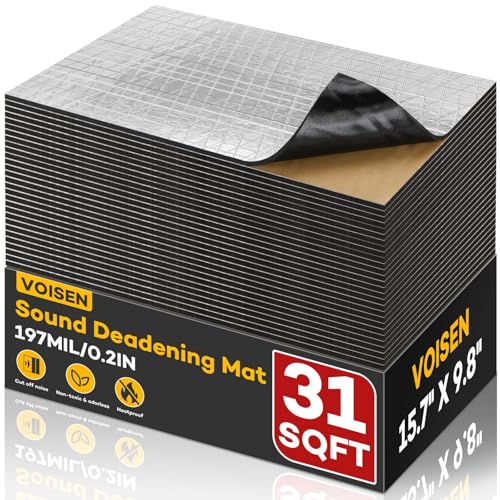
Sound Deading Material for Cars 197 mil 31 sqft

32 sqft Sound Deadening Mat 197 mil 30 Pcs

RUNSUNSPRI Car Sound Deadening 50 sqft Mat
More Details On Our Top Picks
Siless Hybrid leans into a three-layer build, combining butyl mastic, PE foam, and a mass-loaded butyl membrane. That mix gives it a broader mission than simple vibration damping, especially in cars where road hum and exhaust drone travel through thin panels.
For daily commuters and long-distance drivers, the appeal is the all-in-one format, since it aims to manage vibration, heat transfer, and low-frequency noise at once. The trade-off is straightforward, it’s a more complex layer stack, so trimming and fitting around curves can take a little more patience than a plain pad.
Strong Points
- Three-layer construction targets more than one noise source.
- Mass-loaded layering helps in doors, floors, and trunk panels.
- Useful where heat shielding matters near the exhaust side of the cabin.
- Good match for drivers wanting fewer separate materials.
Things To Consider
- Layered material can feel less simple to shape around tight contours.
- 25 square feet suits targeted work more than a full large-vehicle project.
- Heavier builds can add effort during installation.
Feature Snapshot
Who It Suits Best
Drivers chasing a more complete cabin treatment, rather than a single-purpose patch job, fit this Siless Hybrid well.
A Better Fit Elsewhere
RUNSUNSPRI Car Sound Deadening 50 sqft Mat suits larger vehicles and broader coverage goals better.
Siless Max trims the concept back to a more concentrated butyl damping mat, which makes sense for panels that need firmer vibration control. Compared with the Hybrid above, this one feels more focused on raw damping than on layered barrier construction.
That focus suits door skins, trunk lids, and other sheet-metal surfaces where resonance shows up as a hollow buzz. The trade-off is that less layered complexity can mean less help with heat and broad insulation, so it fits a narrower job description.
Highlights
- 120 mil thickness gives it a dense, substantial feel for panel damping.
- 30 square feet covers a useful spread of common cabin surfaces.
- Butyl formulation fits automotive vibration control well.
- Good choice for car audio upgrades that need cleaner panel behavior.
Worth Noting
- Single-purpose damping is less versatile than layered hybrid materials.
- Thicker material can take more care around tight bends and seams.
- No heat-barrier claim in the source, so insulation expectations should stay modest.
Quick Facts
Who Should Grab It
Audio-focused builds and owners chasing firmer panel feel benefit most from this Siless Max format.
Where A Sibling Pick Shines
Siless Hybrid 3in1 25 sqft Sound Deadening Mat suits drivers who want heat handling and insulation in the same install.
This CUKWUYBY kit stands out for coverage first, since 36 square feet split across 33 pieces makes it easier to spread material across several zones. That layout can help in a family car or project vehicle where doors, hatch area, and smaller patches all need attention.
Compared with the Siless picks, the piece count may make layout feel more flexible for odd-shaped sections, though it also means more seams to manage. The honest read is that this format works best for methodical installers who do not mind a bit of planning.
Upsides
- 36 square feet gives useful reach for broad interior work.
- 33-piece layout helps section off smaller panels cleanly.
- 80 mil thickness keeps the material in a practical mid-thick range.
- Works well for staggered installs over time.
Minor Gripes
- More pieces usually mean more cuts and more alignment work.
- Seam count can rise in larger installations.
- Source details leave out extra layer or heat-barrier claims.
Details At A Glance
Whose Shelf It Belongs On
DIY installers who want broad coverage without jumping to a heavier hybrid format will find this CUKWUYBY set useful.
Swap It Out When
Siless Max 120 mil 30 sqft Sound Deadening Mat fits tighter, more vibration-first projects better.
VOISEN takes a different route with an aluminum foil foam construction, which changes the feel of the product compared with the butyl-heavy mats above. That kind of composite often suits mixed surfaces, where a foil face and foam layer can help the material sit neatly on panels.
For hatch areas, floor zones, and other places with uneven geometry, that structure can make fitting feel less boxy. The caveat is simple, this kind of design tends to appeal more to general soundproofing jobs than to enthusiasts chasing maximum mass.
Bright Spots
- Foil-and-foam format offers a different fit profile from pure butyl mats.
- 31 square feet gives a useful spread for several cabin zones.
- 197 mil thickness suggests a substantial material build.
- Can suit mixed-surface jobs where panel shape matters.
Points To Note
- Foam-forward construction may feel less dense than heavy butyl layers.
- 31 square feet is solid for many vehicles, but large rigs can need more planning.
- Surface prep still matters for clean adhesion and long-term holding.
Core Details
Made For
Drivers who want a foil-foam format for irregular panels and medium-size coverage fit this VOISEN kit well.
Reach For A Different Pick When
Butyl Sound Deadening 80mil 36sqft Mat (33pcs) is the neater fit for installers who want more piece-level planning.
YesBes keeps the formula familiar with a 197 mil, 5 mm build and a 32 square foot kit size, which lands in the middle ground for many cabin projects. That balance makes it a sensible match for sedans and crossovers where the goal is steady noise reduction rather than an elaborate full-car treatment.
Compared with the VOISEN panel, this one leans a touch more toward a tidy, general-purpose layout. The drawback is predictable, mid-pack kits rarely bring a dramatic specialty feature, so the value lives in practical coverage and thickness.
Reasons To Buy
- 197 mil thickness gives the kit a substantial profile.
- 32 square feet suits many everyday vehicle projects.
- 30-piece layout makes section-by-section placement manageable.
- Good middle-ground option for routine road-noise work.
Softer Spots
- It focuses on core damping rather than multi-layer features.
- Installation still depends on careful panel prep and rolling.
- Piece count may leave a few extra seams in larger jobs.
Feature Card
Perfect Match For
Routine vehicle projects and first-time installers who want a straightforward thick mat fit this YesBes kit well.
Look Elsewhere When
RUNSUNSPRI Car Sound Deadening 50 sqft Mat suits broader coverage across bigger vehicles more comfortably.
RUNSUNSPRI is the coverage-heavy option in this group, with 50 square feet aimed at doors, roof, chassis, trunk, wheel arches, and hood areas. That makes it a serious candidate for larger vehicles or for anyone building a more complete quieting plan in stages.
The three-layer structure, butyl, aluminum foil, and a high-adhesion backing, gives it a broader fit story than the simpler mats earlier in the list. The trade-off is that a larger kit and flexible sheet format can take more time to cut and place cleanly, especially around complex curves.
What We Like
- 50 square feet gives broad reach for larger cabin projects.
- Three-layer construction supports damping and general isolation.
- Flexible sheets help with curved and uneven surfaces.
- Works across sedans, SUVs, and trucks.
- Useful for staggered installs in high-noise zones.
Areas To Watch
- Large coverage means more layout planning before installation starts.
- Complex areas still need careful cutting for a clean finish.
- Broader coverage can feel unnecessary for small door-only jobs.
Technical Sheet
Built With In Mind
Owners of SUVs, trucks, and larger daily drivers who want broad, all-around coverage get the most from this RUNSUNSPRI kit.
Another Choice May Suit
Siless Max 120 mil 30 sqft Sound Deadening Mat suits smaller, vibration-first jobs with a tighter material count.
How To Choose The Right Car Sound Deadenings
Match Thickness To The Noise Problem
Thickness usually drives the first impression of a sound deadening mat. Thicker butyl sheets tend to help with vibration-heavy areas like doors, trunk lids, and wheel wells, while layered composites aim at more than one issue at once.
That matters in real use because a commuter sedan and a cargo-focused SUV rarely need the same build. A thin, simpler mat can suit light resonance control, while a heavier stack makes more sense where panel buzz and road drone show up together.
Choose Coverage For The Vehicle Size
Coverage is the easiest number to underestimate. A 25 to 32 square foot kit often fits a few targeted zones, while 50 square feet starts to suit broader cabin work in larger vehicles.
That gap becomes obvious during installation, especially in doors, floor sections, and the trunk. A smaller kit can be perfectly fine for an audio project, but a full quieting plan usually needs more material than first-time installers expect.
Think About Layer Style And Fit
Pure butyl mats usually focus on damping sheet-metal vibration. Hybrid or foam-faced designs add another dimension, such as barrier support or a different feel on uneven panels.
The trade-off is handling. Simpler sheets can be easier to place, while multi-layer formats may need more trimming around curves, seams, and stamped contours.
Plan For Installation Time And Cleanliness
Surface prep matters more than flashy materials. Clean metal, careful cutting, and firm pressure after placement all shape the final result, especially in cars that see temperature swings.
Piece count also affects the job. Large sheets reduce seams, while smaller tiles help around odd shapes, so the right format depends on whether the project centers on speed or fine placement.
Things Worth Knowing First
Mistakes Worth Dodging
Many car projects go sideways because the kit size is too small for the area that needs coverage. Another common miss is buying thick material for a cramped surface, then discovering that clean fitting takes more work than expected.
Surface preparation gets skipped often too, and that usually hurts adhesion. A clean, dry panel gives the mat a far better chance of staying put through heat, vibration, and repeated door use.
What The Higher Tier Buys
Higher-tier mats usually justify themselves with denser material, multi-layer construction, or more coverage per kit. Those traits matter because they can address vibration, insulation, and broad cabin quieting in one purchase.
The upgrade makes sense for long-distance commuters, audio builds, and larger vehicles where basic damping only goes so far. For a single door or a small patch job, simpler mats often cover the need without extra complexity.
Frequently Asked Questions
What does mil mean in car sound deadening?
Mil is a thickness unit, and higher numbers usually point to a thicker sheet. In car sound deadening, thicker material often targets vibration control more aggressively.
How much coverage does a typical car need?
That depends on the project scope, since a single door job uses far less than a whole-cabin treatment. Larger vehicles usually need more square footage than a compact car.
Are hybrid mats better than simple butyl mats?
Hybrid mats bring extra layers, which can help with more than vibration alone. Simple butyl mats stay easier to manage and often suit targeted installs well.
Does piece count matter?
Yes, because smaller pieces make curved or broken-up areas easier to cover. Large sheets can reduce seams, but they take more care during placement.
Where does sound deadening help the most?
Doors, floors, trunks, wheel arches, and roofs usually show the biggest payoff. Those areas carry a lot of vibration and road noise into the cabin.
Closing Thoughts
Car Sound Deadenings work best when the product matches the job, not the other way around. Thin resonance control, layered heat handling, broad coverage, and panel-friendly formats all solve different cabin problems. Siless Hybrid suits a more complete treatment, while RUNSUNSPRI leans toward larger-scale coverage, and the middle picks sit comfortably between those extremes. A careful match here makes the car feel calmer without turning the install into an unnecessary project.