

Car Stereo Radios matter most in the small routines, the school run, the commute, the weekend errand loop. A clear display, a sensible phone connection, and steering-wheel control support can turn a cluttered dash into something far easier to live with.
The seven picks below cover simple digital media units, screen-forward multimedia receivers, and larger touchscreen models with Apple CarPlay and Android Auto support. That spread helps match older vehicles, daily drivers, and installs where backup camera integration or subwoofer output matters.
Quick Look At The Shortlist
PLZ 10.1″ Wireless Single Din Car Radio Stereo

Pioneer MVH-S230BT 1-Din Car Stereo

Pioneer DMH-130BT 6.8″ Capacitive Touchscreen

Sobalai Single Din Radio Car Stereo 6.9″ UHD Touchscreen

Pioneer MVH-S110BT 1-Din Digital Media Car Stereo

Kissound Double Din Car Stereo 7″ HD Touchscreen

Kissound 7″ Double Din Car Stereo
More Details On Our Top Picks
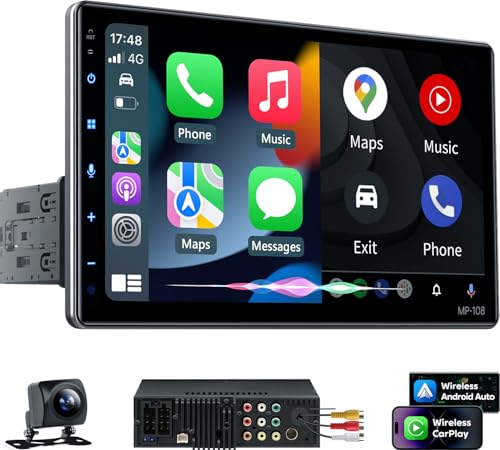
The large 10.1-inch screen gives this PLZ unit a more dashboard-dominant feel than the simpler Pioneer models above. Wireless phone integration, Bluetooth 5.3, navigation support, backup camera support, and steering-wheel control compatibility make it a strong fit for drivers who want a single-din chassis with a modern control surface.
The trade-off is straightforward: more features usually mean more setup time and a greater need for careful install planning. Commuters who rely on maps, media apps, and rear-view assistance will get the most from it, especially in older vehicles that need a dramatic usability upgrade.
Strong Points
- 10.1-inch display gives menus and camera views room to breathe.
- Wireless phone mirroring reduces cable clutter for daily starts and stops.
- Bluetooth 5.3 suits hands-free calling and quick music handoff.
- Backup camera support helps with parking in tight lots.
- Steering-wheel control support keeps common actions within easy reach.
Things To Consider
- The richer feature set asks for a more careful install.
- Single-din fitment still depends on the vehicle’s dash layout.
- Extra functionality can feel busy for drivers who only want radio and USB playback.
Feature Snapshot
Who It Suits Best
Drivers upgrading an older car and wanting a large screen with wireless phone features will get the strongest match here.
Where A Sibling Pick Shines
Pioneer DMH-130BT is the cleaner fit for shoppers who want a more traditional touchscreen layout without the 10.1-inch footprint.
After the larger screen on the PLZ unit, this Pioneer keeps things compact and familiar. Bluetooth, USB input, and AM/FM playback cover the core daily uses without adding a lot of interface clutter, which matters in a work truck or an older commuter that needs a simple refresh.
The 50W x 4 output rating refers to the power available across four channels, a useful baseline for stock-speaker upgrades. One small catch is that it stays focused on media playback rather than screen-based navigation, so drivers who want a full phone-display interface should look farther down the list.
What We Like
- Compact 1-din layout fits many older dashboards cleanly.
- Bluetooth support keeps phone calls and music in one place.
- USB input gives a simple wired source option.
- 50W x 4 output provides a practical amp foundation for typical installs.
- Selectable RCA output broadens system-building flexibility.
Minor Gripes
- No built-in full touchscreen interface.
- The media-first design may feel plain beside the larger-screen units here.
- USB and Bluetooth focused setups still depend on a tidy install for clean cable routing.
Core Details
Built With In Mind
Commuters who want a plain, compact receiver with Bluetooth and USB support will find the layout easy to live with.
Another Choice May Suit
Pioneer DMH-130BT makes more sense for drivers who want a touchscreen and backup camera support in a double-din opening.
This Pioneer lands in the middle of the group in a useful way, with a 6.8-inch capacitive touchscreen, backup camera support, USB playback, and steering-wheel input. Capacitive means the screen responds to the electrical touch of a finger, which usually feels quicker than older resistive panels and matters every time menus get used at a stoplight or in a driveway.
The short chassis helps in tighter dash spaces, and that matters in vehicles where cable room behind the radio is limited. Compared with the simple MVH-S230BT above, this one adds a much fuller visual interface, though the trade-off is a more involved install than a basic media receiver.
Standout Traits
- 6.8-inch capacitive screen keeps controls visually clear.
- Backup camera support is useful for everyday reversing.
- Short chassis can make installation easier in cramped spaces.
- FLAC support helps preserve high-resolution audio files.
- Steering-wheel input keeps factory controls useful after the swap.
Points To Note
- Double-din fitment still needs the right dash opening.
- Screen-based menus add setup steps compared with a simpler receiver.
- Touch-focused control can collect fingerprints and needs occasional wiping.
Details At A Glance
Whose Shelf It Belongs On
Drivers with a double-din dash opening and a clear need for a touchscreen will get the cleanest fit here.
Swap It Out When
PLZ 10.1″ Wireless Single Din Car Radio Stereo suits shoppers who need a larger display in a single-din setup.
Some installs want a more modern screen without moving to a full double-din body, and that is where this Sobalai model earns attention. Wireless CarPlay and Android Auto, a 6.9-inch UHD touchscreen, Bluetooth, mirror link, and USB Type-C fast charging create a feature stack that feels aimed at daily phone-first use.
UHD here points to a higher-resolution display, which helps text and icons stay easier to read at a glance. The honest read is that this much functionality can feel like a lot for a driver who only needs radio and one music source, but for smartphone-heavy commuting it makes a strong case.
Upsides
- Wireless phone integration cuts down on cable handling.
- 6.9-inch display offers a practical balance of size and fit.
- USB Type-C fast charging supports newer cable habits.
- Backup camera support helps turn parking into a simpler routine.
- EQ support gives more control over cabin sound balance.
- SWC compatibility keeps steering-wheel controls relevant.
Areas To Watch
- Feature density can make setup more involved than a basic receiver.
- Mirror link use depends on the phone setup and app support.
- Touchscreen upkeep usually means the occasional fingerprint wipe.
Feature Card
Perfect Match For
Phone-centered commuters who want a large display and wireless app access in a single-din install will get the most from it.
Look Elsewhere When
Pioneer MVH-S230BT is the cleaner match for drivers who want a simpler, no-screen setup with fewer menu layers.
This Pioneer trims the concept down to a straightforward digital media receiver, and that restraint is part of the appeal. Bluetooth, USB input, AM/FM radio, and phone compatibility cover the basics for drivers who want a tidy replacement without a touchscreen taking over the dash.
It sits close to the MVH-S230BT in spirit, but the feature set stays especially lean for shoppers who value simplicity over flair. One practical advantage is easier daily living, since fewer menus usually mean less learning curve and less distraction during short trips or repeated errands.
Best Bits
- Lean feature set keeps the dash uncluttered.
- Bluetooth and USB cover the main media sources.
- 50W x 4 output gives a usable base for speaker upgrades.
- AM/FM support preserves standard radio listening.
- Front and SW RCA output adds expansion room.
Softer Spots
- No screen-based navigation interface.
- Minimal design may feel plain beside the touchscreen units in this list.
- Owners who carry multiple cables may want a tidy storage spot to keep the install area uncluttered.
Quick Facts
Who Should Grab It
Drivers replacing a basic factory radio and wanting a compact, familiar control layout will find this an easy fit.
Reach For A Different Pick When
Sobalai Single Din Radio Car Stereo 6.9″ UHD Touchscreen suits shoppers who want wireless phone mirroring and a larger visual interface.
Family cars and busy commuters often need a unit that can handle several jobs at once, and this Kissound model fits that brief well. The 7-inch HD touchscreen, wireless Apple CarPlay and Android Auto, Bluetooth, 240W output, subwoofer output, mirror link, FM/AM support, and backup camera compatibility create a broad feature set without moving into oversized territory.
HD screen quality helps the display stay easier to read in motion, though setup complexity is the usual trade-off for a model this feature-rich. The power and subwoofer output make it more appealing for shoppers building a fuller sound system rather than just replacing a worn-out factory head unit.
Reasons To Buy
- 7-inch screen keeps the interface large but manageable.
- Wireless phone integration suits daily driving and quick starts.
- 240W output gives more headroom for system planning.
- Subwoofer output is useful for bass-focused layouts.
- Backup camera support adds practical parking help.
- SWC support keeps steering-wheel controls in play.
Room For Improvement
- The long feature list can take time to configure cleanly.
- Mirror link depends on the connected device and its behavior.
- Double-din fitment still depends on dash space and trim kit planning.
Spec Overview
Best Suited To
Drivers who want a feature-heavy double-din head unit for a family vehicle or a daily driver with audio ambitions will get the best fit here.
Skip It When
Pioneer MVH-S110BT is the cleaner choice for a simpler setup that stays closer to stock-style operation.
This Kissound keeps the same broad family as the previous model, but the layout feels a little more trimmed for daily use. Wireless Apple CarPlay and Android Auto, Bluetooth, 240W output, SWC support, subwoofer out, mirror link, USB-C, AUX, TF card support, FM/AM radio, and backup camera compatibility give it a wide set of inputs for mixed habits.
The USB-C, AUX, and TF options matter in vehicles where several people hand around different music sources or older media files. That flexibility is useful, though the wider the feature list becomes, the more important it is to keep the install tidy and the initial setup organized.
Highlights
- USB-C, AUX, and TF card support widen source options.
- Wireless smartphone integration fits fast in-and-out driving.
- 240W output suits modest system expansion.
- Backup camera support improves day-to-day parking routines.
- SWC support keeps familiar wheel controls active.
Small Caveats
- Input variety can feel busy for drivers who want a bare-minimum layout.
- Mirror link behavior depends on the connected phone.
- Touchscreen faces usually need routine cleaning to stay clear.
Technical Sheet
The Right Fit
Everyday drivers who want a broad set of source options without stepping up to a larger display should feel at home with this one.
Where A Sibling Pick Shines
Kissound Double Din Car Stereo 7″ HD Touchscreen is better for shoppers who want the broader camera and display emphasis of the larger feature set.
How To Choose The Right Car Stereo Radios
Match The Body Style To The Dash
Single-din units suit tighter openings and older vehicles, while double-din units make sense in dashboards built for a larger faceplate. That physical match matters before any feature list does, because a polished screen means little if the opening does not fit cleanly.
Decide How Much Phone Integration Matters
Wireless Apple CarPlay and Android Auto turn the radio into a phone-friendly hub for maps, calls, and audio apps. Drivers who rely on navigation every day usually benefit most, while commuters who mainly want radio and USB playback can keep things simpler.
Watch The Audio Paths
Power output, RCA outputs, and subwoofer output shape how far a system can grow later. A basic media receiver suits stock speakers, but a model with more routing options helps when a sub or amplifier enters the plan.
Balance Screen Size With Routine Use
Larger touchscreens are easier to read in motion, especially for backup camera views and map prompts. The trade-off is more glare, more setup, and more screen cleaning, so the right size depends on how much time the dashboard gets in daily life.
What To Weigh Before You Commit
Common Shopping Slip Ups
Many installs go wrong at the fitment stage, not the feature stage. A double-din face in a single-din opening, or the reverse, turns a promising upgrade into a trim and bracket puzzle.
Phone compatibility also deserves a close look, especially with wireless mirroring and mirror link features. Some drivers only need Bluetooth and USB, and paying for extra screen tools makes little sense in that case.
The Upgrade Payoff
Higher-tier units usually cost more because the display, wireless integration, and signal routing are more involved. Capacitive touch panels, camera support, and stronger output ratings also tend to show up as the feature set grows.
The upgrade is easiest to justify in a daily driver, family vehicle, or work truck that sees frequent use. For a simple commuter, a leaner Pioneer model can deliver the cleaner ownership experience with less setup overhead.
Frequently Asked Questions
What matters most in Car Stereo Radios?
Fitment comes first, followed by the sources and phone features that fit daily driving habits. A clear display helps, but only after the chassis style matches the dash.
Is Bluetooth enough for most installs?
Bluetooth works well for calls and streaming, especially in basic replacement radios. Screen-based phone mirroring makes more sense for drivers who want maps and app access on the unit itself.
Do larger screens always make sense?
Larger screens are easier to read and better for backup camera views. They also add complexity, so the gain is clearest in vehicles used often.
What is a digital media receiver?
A digital media receiver handles audio sources without the traditional focus on discs. That makes it a good fit for Bluetooth, USB, and phone-led listening.
Are steering-wheel controls worth keeping?
Steering-wheel control support keeps volume, track, and source changes close at hand. That usually feels especially useful in commutes and family vehicles with frequent stop-and-go driving.
Closing Thoughts
The strongest match depends less on brand name and more on the shape of the install, the phone setup, and how much visual control the dash needs. PLZ and the two Kissound units lean hard into larger screens and phone integration, while the Pioneer models stay cleaner and simpler. That split gives plenty of room for a sensible choice rather than a flashy one. For most vehicles, the right radio is the one that fits the dash and keeps daily driving calm.