

Factory speakers often flatten low end and blur detail, especially in older cars or noisy cabins. This roundup focuses on coaxial and mid-range options that can sharpen vocals, add body to kick drums, and suit common upgrade paths without forcing a full system rebuild. Commuters, weekend road-trippers, and anyone replacing tired stock hardware will find the most value here.
Quick Shortlist For Faster Comparison

ORION Cobalt CM654 6.5″ Mid-Range Bullet Loudspeakers
JBL GTO629 Premium 6.5-Inch Co-Axial Speaker

PIONEER F-Series TS-F6935R 6 x 9 3-Way Coaxial Car Speakers

CT Sounds Meso 6.5″ 300 Watt 2-Way Premium Coaxial Car Speakers

PIONEER A-Series Plus TS-A1681F 6.5″ 4-Way Coaxial Car Speakers

CT Sounds BIO-6-5-COX 6.5 Inch Coaxial Car Speakers
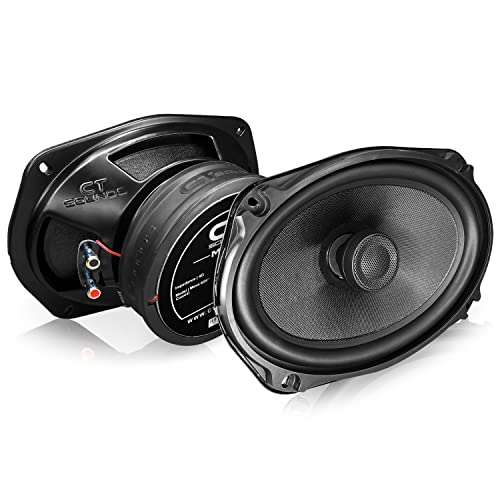
CT Sounds Meso 6×9″ 400 Watt 2-Way Premium Coaxial Car Speakers
More Details On Our Top Picks
ORION takes a different route from the coaxial models below. The bullet-style mid-range design points energy toward the cabin, which suits loud systems, open door-panel builds, and setups that need voice and instrument presence to cut through road noise.
The 6.5-inch format keeps placement familiar, while the 1.5-inch voice coil helps explain why this model sits in a more serious category than simple factory replacements. The trade-off is plain enough, it is aimed more at output and projection than relaxed, full-range listening.
Strong Points
- High 250W RMS handling supports stronger amplification without sounding strained on paper.
- 4-ohm impedance keeps it compatible with many common car audio layouts.
- 1.5-inch voice coil suggests better thermal headroom for louder sessions.
- Mid-range bullet format helps vocals and guitars stay forward in noisy cabins.
Things To Consider
- Mid-range focus means bass duties still belong elsewhere in the system.
- This style suits more involved installs than a basic door swap.
- Owners planning a clean factory-style upgrade may find the presentation too direct.
Feature Snapshot
Who It Suits Best
Car audio hobbyists building a louder front stage or replacing tired mid-range drivers stand to get the most from this ORION set.
Where A Sibling Pick Shines
JBL GTO629 Premium 6.5-Inch Co-Axial Speaker is the easier fit for daily commuters who want broader sound from a simpler install.
After the ORION’s more aggressive character, JBL moves back toward a friendlier all-round setup. A coaxial speaker combines the woofer and tweeter in one frame, which keeps installation simpler for stock door locations and helps the sound stay cohesive.
That makes this set a sensible upgrade for daily driving, especially where the goal is cleaner vocals and more convincing low end without rebuilding the cabin. The honest read is that it targets balance first, so it suits mixed listening better than hard-edged output chasing.
Upsides
- Coaxial layout keeps the upgrade path straightforward.
- Pair packaging suits left-right replacement in one step.
- Broad tuning helps everyday music sound less thin than worn factory units.
- Good match for commuters who want clarity without complex hardware changes.
- Works as a practical middle ground between ORION’s focused output and the bigger Pioneer 6 by 9 options.
Areas To Watch
- Owners chasing very deep bass will still want a subwoofer downstream.
- The sound profile is shaped for general use, not extreme SPL-style installs.
Core Details
Built With In Mind
Drivers replacing worn factory speakers in a daily commuter or family car will find the JBL set easy to place and easy to live with.
A Better Fit Elsewhere
CT Sounds Meso 6.5″ 300 Watt 2-Way Premium Coaxial Car Speakers suit listeners who want a firmer, more deliberate tuning than JBL’s broader approach.
The Pioneer 6 by 9 shape changes the story again, because larger cone area can move more air than a 6.5-inch door speaker. For sedan rear decks or larger factory openings, that usually translates into a fuller, roomier presentation with less strain on the midbass.
Its 3-way layout splits sound duties among three drivers, which tends to help keep treble smooth while preserving body underneath. Compared with the JBL and CT Sounds 6.5-inch options, this one feels more suited to vehicles that can physically take the size and want scale without a complicated install.
Best Bits
- 6 x 9 format gives it a larger footprint for fuller output.
- Three-way design helps divide frequency work across more drivers.
- Well suited to factory replacement roles in compatible openings.
- High-efficiency design pairs well with OEM-style power levels.
- Balanced sound and smoother treble support long listening sessions in daily use.
Worth Noting
- The larger size rules out many 6.5-inch door locations.
- Drivers with smaller vehicles may find the fit limiting.
- Rear-deck or package-tray installs are the natural home here, not every cabin layout.
Technical Sheet
Right Fit For
Owners with a compatible rear deck or larger factory opening will get the cleanest path to a broad, OEM-friendly refresh.
Look Elsewhere When
JBL GTO629 Premium 6.5-Inch Co-Axial Speaker suits compact door locations that cannot accept a 6 by 9 frame.
CT Sounds lands in a more focused lane than the JBL set, and that narrower tuning can be useful in a car where detail matters more than sheer volume. The 2-way layout keeps the system simple, yet the 300-watt ceiling suggests more headroom than basic entry-level replacements.
In a daily driver with good cabin sealing, this kind of speaker often appeals to listeners who want firmer attack on drums and less smear in the upper mids. The trade-off is that it rewards a cleaner install and sensible amplification, rather than casual plug-and-play expectations.
Bright Spots
- 2-way coaxial layout keeps integration straightforward.
- 300W max handling leaves room for more capable systems.
- Useful for tighter, more disciplined sound in music-heavy commutes.
- Pairs well with setups where bass control matters as much as volume.
Small Caveats
- Careful installation matters more here than on some softer-tuned factory swaps.
- Listeners wanting a warmer, less focused top end may prefer Pioneer’s A-Series Plus model.
- The pair leans toward concentrated listening rather than purely casual background play.
Details At A Glance
The Right Fit
Enthusiasts who want a cleaner, more controlled listen from a standard 6.5-inch opening are the natural match for this CT Sounds pair.
Swap It Out When
PIONEER A-Series Plus TS-A1681F 6.5″ 4-Way Coaxial Car Speakers suit shoppers who want a broader feature set and installation adaptors.
Among the 6.5-inch options, this Pioneer lands closest to a full factory-friendly package. The 4-way design divides playback across more driver elements than the simpler JBL and CT Sounds 2-way models, and that can help the top end feel a touch more layered in everyday driving.
Installation adaptors included in the box matter more than the spec sheet suggests, because they can save time in common retrofit jobs. The caution is predictable, a more feature-packed coaxial setup still needs the right enclosure depth and careful matching if the goal is strong bass as well as clean treble.
Highlights
- 4-way coaxial layout brings a more layered sound path.
- Included adaptors can simplify factory replacement work.
- Enhanced bass claim points to a fuller low end than basic replacement speakers.
- Good match for drivers who want a broad upgrade without moving to a separate component set.
Points To Note
- More complex driver arrangements can be overkill for very simple audio needs.
- Install depth still matters in some doors and older vehicles.
- Listeners who want the most direct midrange may still prefer the ORION pair.
Core Details
Who Will Love This
Drivers upgrading a stock system and wanting a broader feature set without leaving the 6.5-inch format will find this Pioneer especially sensible.
Where A Sibling Pick Shines
CT Sounds Meso 6.5″ 300 Watt 2-Way Premium Coaxial Car Speakers suit listeners who prefer a leaner, less layered sound path.
This CT Sounds set is the restrained option in the group, and the published power figures make that plain. Each speaker is rated at 50 watts RMS and 100 watts max, while the pair totals 100 watts RMS and 200 watts max, which suits moderate systems rather than bigger amplification plans.
The 4-ohm load keeps it in familiar territory for many installations, and the 6.5-inch size makes it practical in standard door positions. For a compact daily setup or a straightforward refresh of tired stock speakers, that balance is useful, even though it does not chase the pressure of the ORION or the larger Pioneer 6 by 9 pair.
What We Like
- Clear, modest power rating makes system matching easier.
- 6.5-inch coaxial form keeps installation familiar.
- 4-ohm impedance fits many common car audio layouts.
- Good choice for a simple, low-drama replacement job.
Room For Improvement
- Power ceiling is lower than several other picks in this roundup.
- Listeners chasing fuller bass in a larger cabin may want a larger driver.
- The lighter spec sheet suits basics more than ambitious upgrades.
At A Glance
Whose Shelf It Belongs On
Budget-conscious commuters and first-time upgraders with a standard 6.5-inch opening will find this pair easy to place and easy to understand.
A Better Fit Elsewhere
PIONEER A-Series Plus TS-A1681F 6.5″ 4-Way Coaxial Car Speakers suit shoppers who want more layered sound and included install adaptors.
The final CT Sounds entry is the largest frame in the set, and that matters for rear decks or other openings that can accept 6 by 9 hardware. Bigger drivers often move more air with less effort, so this pair naturally leans toward stronger scale and firmer low end than the 6.5-inch Meso model.
At 400 watts max, it sits above the rest of the group on headroom, which suits listeners who want stronger playback without crossing into a more complicated multi-speaker build. The trade-off is size and fit flexibility, so this makes the most sense in a car that already has the right space.
Reasons To Buy
- 6 by 9 format supports a fuller, larger-scale presentation.
- 400W max handling gives it a strong ceiling for common upgrades.
- 2-way coaxial layout keeps the overall design straightforward.
- Good match for rear deck swaps in compatible sedans.
- Useful where bass weight matters more than a tiny footprint.
Softer Spots
- Size limits placement in many doors and compact hatch openings.
- Drivers with small cabin layouts may find the fit too specific.
- Installation is easiest where the vehicle already accepts 6 by 9 speakers.
Feature Rundown
Built With In Mind
Owners of sedans or larger vehicles with 6 by 9 openings will get the cleanest fit and the most natural payoff from this pair.
Not Your Match When
CT Sounds BIO-6-5-COX 6.5 Inch Coaxial Car Speakers are the safer choice for compact doors and simpler replacement jobs.
How To Choose The Right Car Speakers For Sound Quality And Bass
Start With The Cabin, Not The Box
Speaker size and vehicle fit come first. A 6.5-inch coaxial model works in many doors, while a 6 by 9 speaker suits rear decks and larger factory openings with more cone area for fuller output.
Cabin noise matters just as much as raw wattage. Road hum, thin door panels, and weak factory wiring can erase detail fast, so a sensible match often sounds better than a spec-heavy mismatch.
Match The Design To The Listening Goal
Coaxial speakers place the tweeter and woofer in one unit, which keeps installation simple and usually gives a smooth all-purpose result. Two-way versions stay straightforward, while three-way and four-way layouts divide sound duties among more driver elements.
Mid-range bullet speakers sit in a different lane. They push vocals and instruments forward, which helps in loud builds, but they are not the right answer for someone expecting deep bass from a door speaker alone.
Power Numbers Need Context
RMS, or continuous power handling, matters more than peak marketing figures. A speaker rated for higher RMS handling can usually sit more comfortably with stronger amplification, while lower-power models fit modest systems better.
Impedance also deserves attention. A 4-ohm speaker is common in car audio and generally easy to pair, but the final result still depends on the head unit or amplifier behind it.
Listen For The Trade-Off, Not Just The Promise
Sharper treble can make vocals pop, yet it can also become tiring in a noisy commute. Fuller bass is useful, but a larger driver or stronger rear-deck opening often matters more than a glossy description.
That is why the most sensible choice usually follows the car’s layout and the kind of music played most often. A clear, slightly restrained speaker often ages better than one that chases excitement at the expense of balance.
Things Worth Knowing First
Where Shoppers Go Wrong
One common mistake is buying around power claims alone. A big watt number means little without the right enclosure, head unit, or amplifier behind it.
Another slip-up is ignoring fit. A 6 by 9 speaker will not solve a 6.5-inch door opening, and a high-output mid-range model will not replace a true bass driver.
The Upgrade Payoff
Higher-tier car speakers usually cost more because of larger voice coils, more complex driver layouts, better materials, and tighter assembly tolerances. Those details can improve control, clarity, and durability in longer listening sessions.
The upgrade makes the most sense in vehicles driven often, especially where the stock system already sounds thin or strained. For casual background listening, a simpler coaxial set may already be enough.
Frequently Asked Questions
Do 6.5-inch speakers usually fit most cars?
Many common door locations accept 6.5-inch speakers, which makes that size a frequent upgrade path. Fit still depends on mounting depth and the vehicle’s factory bracket.
Is a coaxial speaker enough for strong bass?
Coaxial speakers can improve bass compared with worn factory units, especially when paired well. Deep low end still depends on cone size, cabin layout, and system support.
What does 4-ohm impedance mean?
Four ohms is a common electrical load in car audio, so it usually pairs easily with many systems. The match still has to suit the source unit or amplifier.
Are 3-way or 4-way speakers always better?
More ways can help separate frequency duties, but the result depends on tuning and installation. A simpler 2-way speaker can sound cleaner in many daily drivers.
Should rear-deck speakers be 6 by 9?
Rear decks often benefit from the larger surface area of 6 by 9 speakers. Smaller openings or compact cars may need a 6.5-inch option instead.
Final Thoughts
Strong car audio starts with the right match between speaker shape, power handling, and the way a vehicle is built. ORION suits louder, more focused systems, JBL keeps things broad and easy to live with, and the two Pioneer options cover the common factory-upgrade path from simple to more feature-rich. CT Sounds fills in the sharper, more deliberate side of the range, while the 6 by 9 Meso pair brings the biggest footprint and the most room to move air. The cleanest result comes from choosing for the cabin, not the spec sheet alone.